You may have heard children chatting about Tralalero Tralala, Bombardiro Crocodilo, or “brainrot” lately—sometimes with dramatic hand gestures and lots of giggles. Here’s what’s going on, why it’s so appealing to kids, and some simple ways you can respond at home.
What is “Italian brainrot”?
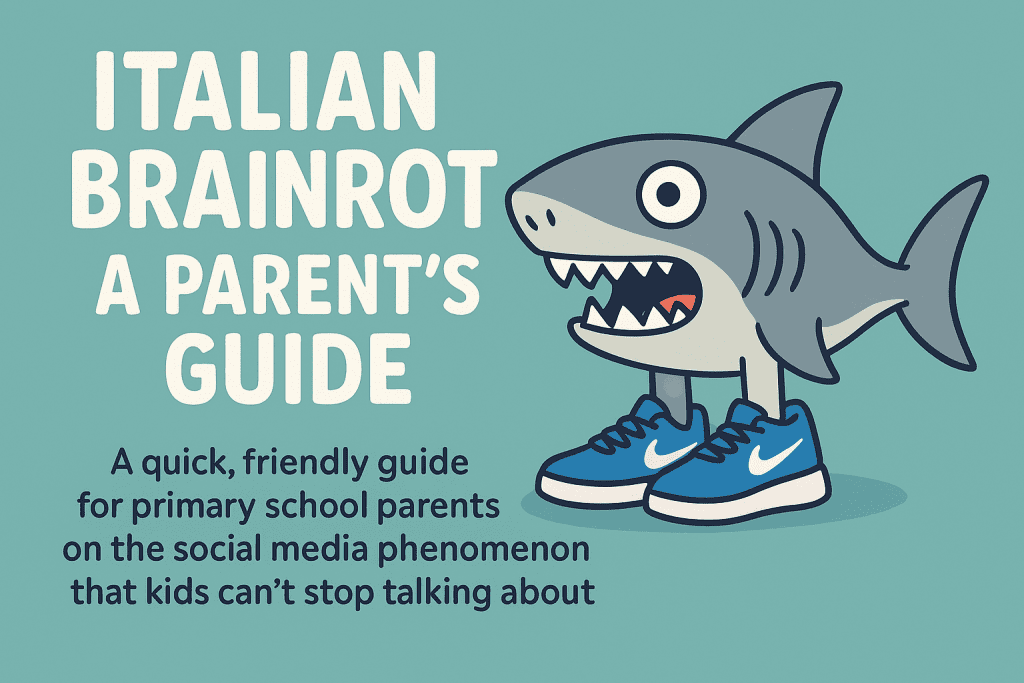
Italian brainrot is a recent internet meme trend built around absurd, AI‑generated creatures (like a shark in blue Nike trainers) with playful, pseudo‑Italian names and a sing‑song voiceover that is deliberately nonsensical. It took off in early 2025 on TikTok and other platforms and has since spread widely among Gen Alpha (roughly ages 6–14) and Gen Z.
The videos typically combine: AI images of animal–object hybrids; exaggerated “Italian” text‑to‑speech narration; chaotic visuals; and repetitive, intentionally silly storylines. The names often use Italian‑style suffixes like ‑ini or ‑ello.
The “brainrot” part comes from a broader slang term for content that’s low‑value and hyper‑addictive (think endless doomscrolling). Oxford University Press highlighted brain rot as a major word in 2024, reflecting concerns about attention and mood after consuming lots of short, trivial content.
Why are children talking about it?
- It’s funny and shareable. The sheer absurdity—odd creatures, rhymes, and over‑the‑top drama—makes kids laugh and repeat lines. Creators and viewers often build “lore” (backstories and relationships) between characters, which kids love to retell.
- It’s everywhere kids hang out online. TikTok, YouTube Shorts, Instagram Reels, and even some Roblox experiences remix these memes rapidly, so children encounter them frequently in short bursts.
- It fits the fast‑paced style of modern feeds. Short, high‑stimulation clips are designed to keep attention—sometimes making it hard to stop scrolling.
Is “brainrot” harmful?
There’s nothing inherently dangerous about laughing at a silly shark in trainers. However, two practical cautions are worth keeping in mind:
- Overuse and attention drain. Lots of fast, noisy clips can leave children feeling mentally “buzzed” yet unfocused and irritable. Psychology and digital‑wellbeing guides link this to variable rewards (surprises every swipe) and fragmented attention.
- Context and language. Because many brainrot audios are remixed, some versions may include crude or blasphemous lines that aren’t obvious to children (or adults!) at first listen. That’s one reason certain original uploads were removed or accounts banned early on.
The best approach is balanced media literacy rather than alarm: help children recognise when content is just quick entertainment, when it’s time to stop, and how to spot versions that aren’t age‑appropriate.
Simple conversation starters at home
Try these light, curious prompts to open the topic without judgment:
- “Which Italian brainrot character makes you laugh most? What’s funny about it?” (Helps children unpack why they enjoy it.)
- “How do you feel after watching lots of short videos—energised, tired, or a bit fuzzy?” (Encourages noticing attention and mood.)
- “What would be a good ‘cut‑off’ point for scrolling? How could we remind ourselves?” (Invites co‑created boundaries.)
Practical digital‑parenting tips (quick wins)
1) Use built‑in safety features on TikTok/YouTube:
- TikTok Family Pairing lets you link your account to your child’s to set screen‑time limits, restrict DMs, and control content. The “For You” feed is highly engaging by design, so limits really help.
- YouTube Kids/YouTube supervised experience (for appropriate ages) provide stronger filtering and time controls than open YouTube. Guidance from parent resources emphasises choosing age‑appropriate modes and reviewing watch history together.
2) Agree a home media routine:
- Set “scroll stops” (e.g., 20–30 minutes max in one sitting), with a fun alternative ready—drawing a favourite character, kicking a ball, or reading. This counters the variable‑reward “slot‑machine” effect of infinite feeds.
- Co‑view sometimes. Watching a few clips together makes it easier to spot versions that are too loud, crude, or overwhelming—and children are more open to guidance when you’ve shared the laugh first.
3) Encourage creativity over passive scrolling:
- Invite children to invent their own silly character on paper or clay (no upload needed), or to write a kinder, age‑appropriate story about a favourite brainrot creature. This keeps the playful spirit while reducing exposure to questionable remixes.
How the school will respond
- We teach digital citizenship and media literacy in age‑appropriate ways, including how to spot when content is “just silly fun,” when it crosses a line, and how to take healthy breaks.
- We focus on kindness and respect. Any content that includes offensive language, religious slurs, or mockery isn’t acceptable in school conversations or projects. (Some brainrot audios in the wild do include this, so we’ll remind children to choose kinder versions—or better, create their own positive spins.)
- We encourage balanced screen habits and plenty of offline play, reading, and outdoor time.
Bottom line for parents
- Italian brainrot is today’s silly, remix‑friendly meme universe; most children enjoy it for the creativity and laughs.
- The healthiest response is guided enjoyment with boundaries: talk about what they’re seeing, set time limits, use platform controls, and steer towards age‑appropriate versions and creative, offline alternatives